
✦ Key Takeaways
- The online counseling vs in-person decision comes down to convenience, comfort level, and the type of support you need — neither format is universally “better.”
- Virtual therapy removes commute time and location barriers, making it easier to stay consistent with weekly sessions.
- In-person counseling can offer a stronger sense of presence for some clients, particularly for trauma work or couples counseling.
- Research shows telehealth counseling produces outcomes comparable to in-person therapy for most concerns, including anxiety, depression, and relationship issues.
- New Direction Counseling offers both formats, including Distance Counseling for clients anywhere in Washington State who prefer to meet from home.
Choosing a counselor used to mean one decision: who. Today it means two — who, and how. Since telehealth became a mainstream part of mental health care, clients have a real choice between sitting across from a therapist in an office or opening a secure video link from their living room.
Both formats work. Both are backed by research. But they don’t feel the same, and they’re not always the right fit for the same person or the same problem. This guide walks through the real differences in the online counseling vs in-person decision so you can choose with confidence instead of guesswork.
What Do We Mean by Online Counseling and In-Person Counseling?
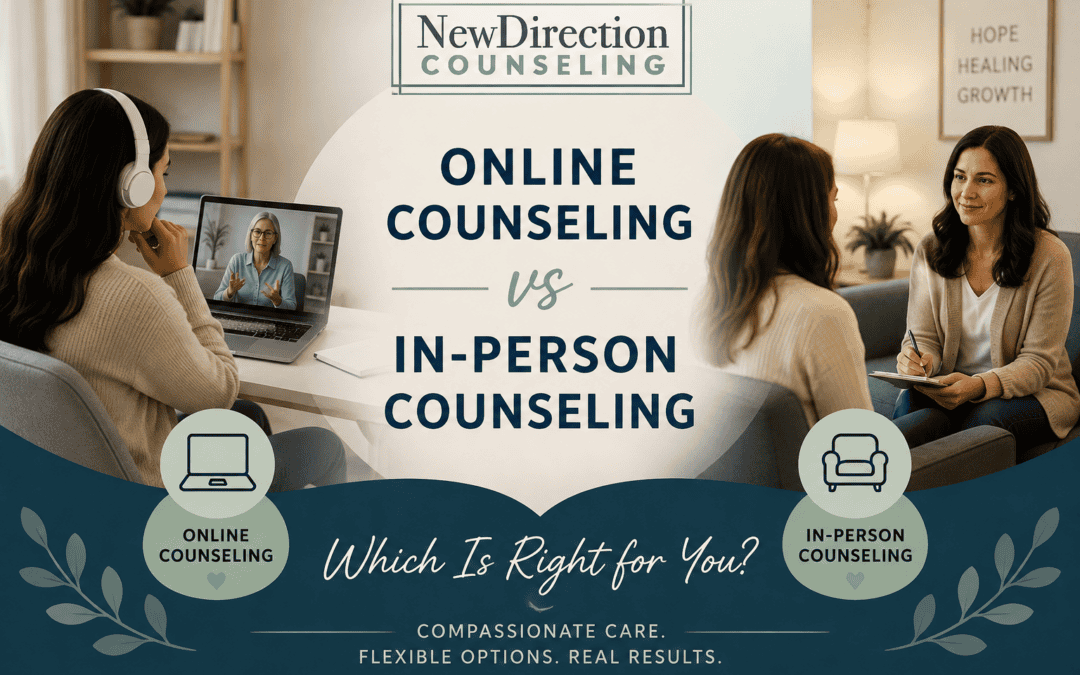
Virtual therapy (also called telehealth counseling) takes place over a secure, HIPAA-compliant video platform, with sessions structured the same way as an in-office visit — same length, same clinical approach, same confidentiality standards. In-person counseling is the traditional model: client and counselor in the same room, meeting on a set weekly schedule at a physical office.
Neither format changes the quality of care you’re entitled to. What changes is the delivery — and that difference matters more for some situations than others.
Online Counseling vs In-Person: A Side-by-Side Comparison
💻 Virtual Therapy / Telehealth Counseling
- No commute — sessions happen from home, work, or anywhere private
- Easier to keep a consistent weekly schedule around work or childcare
- Access to a specialized counselor even if they’re not local to you
- Comfortable for clients who feel more open in a familiar space
- Requires a private room and stable internet connection
🏢 In-Person Counseling
- Full in-room presence, which some clients find grounding
- Fewer at-home distractions during the session itself
- Often preferred for couples counseling and trauma-focused work
- A built-in separation between “session time” and daily environment
- Requires travel time and a set commute to the office
How to Decide Which Format Fits You
1. Consider Your Schedule and Location
If your work hours are unpredictable, you’re a caregiver, or you live outside Vancouver, telehealth counseling often makes the difference between attending sessions consistently and skipping them altogether. Consistency matters more to outcomes than format does, so removing the biggest barrier to showing up is worth weighing seriously.
2. Think About What You’re Working Through
Anxiety, depression, life transitions, and most individual concerns respond just as well to virtual therapy as they do to in-office sessions. Couples counseling and certain trauma modalities, on the other hand, sometimes benefit from being in the same physical room, where body language and shared presence carry more weight.
3. Notice Your Comfort Level with Technology
A stable connection and a private space are the only real technical requirements for telehealth. Clients who feel awkward on video calls sometimes warm up after one or two sessions; others simply prefer the in-person format from the start, and that preference is worth respecting rather than pushing through.
4. Weigh Privacy at Home vs Privacy at the Office
For some clients, a private office away from family members offers a more honest space to talk. For others, driving to an office feels like one more obstacle between them and getting help. Neither answer is wrong — it depends on which environment actually helps you open up.
5. Remember You Can Switch Formats
Many clients start in one format and move to the other as life changes — a new baby, a move out of state, a season where commuting becomes too much. At New Direction Counseling, switching between in-person and Distance Counseling is a normal part of ongoing care, not a disruption to it.
— Proverbs 15:22 (NIV)
Does Telehealth Counseling Actually Work as Well as In-Person?
Multiple clinical studies over the past decade have found that virtual therapy produces outcomes comparable to in-person treatment for anxiety, depression, PTSD, and relationship counseling when delivered by a licensed clinician. The therapeutic relationship — not the medium — is the strongest predictor of progress, which is why the same counselor, the same clinical approach, and the same weekly commitment matter more than whether you’re in a chair or on a screen.
Secure, HIPAA-compliant telehealth counseling for clients anywhere in Washington State.
One-on-one support for anxiety, depression, trauma, and life transitions, in person or online.
Couples support for communication, conflict, and reconnection — available in both formats.
Faith-integrated couples therapy, offered in person in Vancouver or via secure video.
What Clients Say About Switching to Telehealth
Names and identifying details have been changed to protect confidentiality.
I was skeptical that a video call could feel like real therapy, but after the first session I forgot I was even worried about it. Skipping the drive across town means I actually show up every week instead of finding excuses.
Melissa K. · Virtual therapy · Clark County, WA
We tried both. In-person felt right for us as a couple — being in the same room mattered when we were working through some hard conversations. Having that option, and a counselor who offered it, made all the difference.
James & Anna P. · In-person couples counseling · Vancouver, WA
Who Tends to Prefer Each Format
Frequently Asked Questions
Is online counseling as effective as in-person counseling?
Yes. Research consistently shows telehealth counseling produces outcomes comparable to in-person therapy for anxiety, depression, and most relationship concerns, provided sessions are delivered by a licensed clinician on a secure platform.
What’s the difference between telehealth counseling and in-person counseling?
The clinical approach, session length, and confidentiality standards stay the same — the only difference is the delivery method: a secure video call versus meeting in an office.
Do I need special equipment for virtual therapy?
Just a smartphone, tablet, or computer with a camera, a stable internet connection, and a private space where you can talk openly during the session.
Can I switch between online and in-person sessions?
Yes. Many clients move between formats depending on their schedule or season of life, and continuing with the same counselor keeps care consistent either way.
Is telehealth counseling available across Washington State?
Yes. Distance Counseling at New Direction Counseling is available to clients anywhere in Washington, not just in the Vancouver area.
Is online counseling covered by insurance?
Many insurance plans now cover telehealth sessions the same way they cover in-person visits. Our office can help verify your specific coverage before your first appointment.
Conclusion: There’s No Wrong Answer — Only the Right Fit for You
The online counseling vs in-person decision isn’t about which format is objectively superior — it’s about which one removes barriers instead of creating them for you. Virtual therapy offers flexibility and access; in-person counseling offers presence and routine. Either path, paired with the right counselor, leads to the same goal: real progress.
If you’re still unsure, that’s a normal place to start from — a quick conversation can help you decide.
Ready to Get Started? Book Online Counseling Today.
Meet with Ronda Gallawa-Foyt, MA, LMHC from wherever you are — secure, HIPAA-compliant telehealth counseling is available across Washington State, with in-person sessions also offered in Vancouver, WA.
- Distance Counseling — Secure telehealth counseling for clients anywhere in Washington State.
- Individual Counseling — One-on-one support for anxiety, depression, trauma, and life transitions.
- Relationship Counseling — Faith-integrated couples support for communication and reconnection.
- Christian Marriage Counseling — Faith-based couples therapy rooted in Scripture and clinical care.
- EMDR Therapy — Trauma-focused therapy available in person or via telehealth.

Recent Comments